
If you are not in a hurry, consider taking a local train from Sapporo to Otaru. It takes about 10 to 15 minutes longer than JR Rapid Airport, but it stops at Zenibako, Asari, and Minami-Otaru, where rapid trains do not stop. The coastal view along Ishikari Bay is also easier to enjoy when the ride itself becomes part of the trip.
Contents
- Basic Information on Local Trains
- Recommended Tickets and Fares
- Recommended Stopover Stations
- Scenic Views from the Train
- How to Choose Between Local Train and Rapid Airport
- Frequently Asked Questions
- Summary
Basic Information on Local Trains
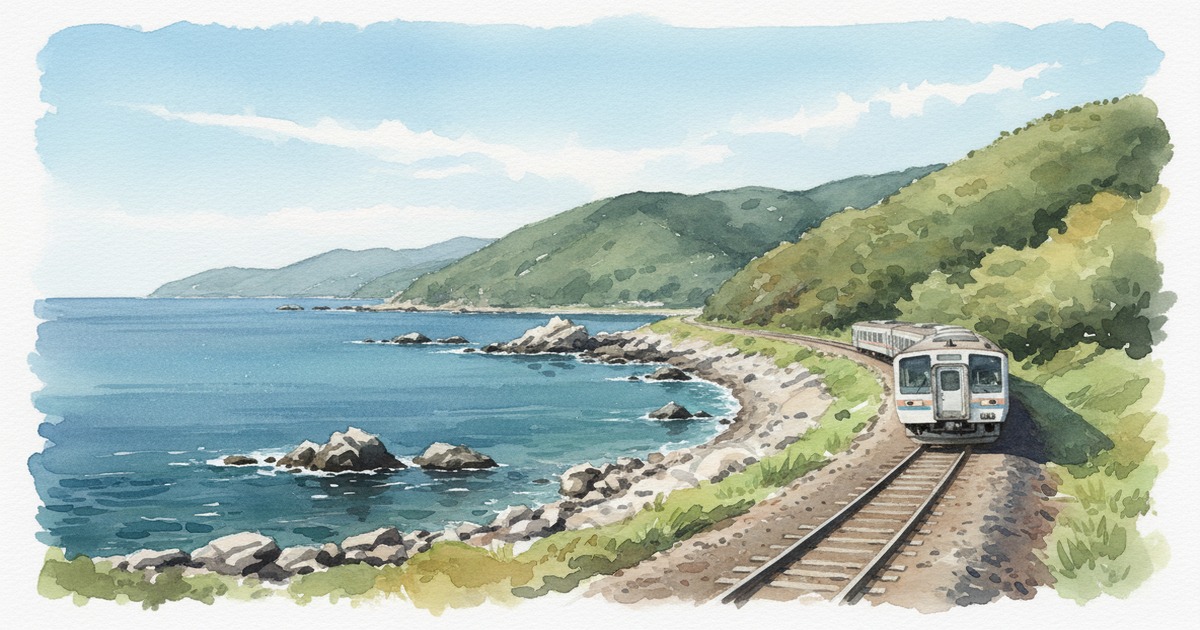 This image was generated by AI for illustrative purposes.
Local trains on the JR Hakodate Line run from Sapporo Station to Otaru Station while stopping at every station.
The travel time is about 45 to 50 minutes. During the day, there are usually two to three local trains per hour, with service from early morning until late at night. Local trains can also be useful at times when Rapid Airport services are not running.
The adult fare is ¥800 and the child fare is ¥400, based on the current fare after the April 1, 2025 revision. Seats are unreserved only, and there is no paid reserved-seat option like the uSeat on Rapid Airport. You can tap in with an IC card such as Kitaca or Suica.
Recommended Tickets and Fares
If you want to enjoy stopovers, JR Hokkaido's Ichinichi Sanpo Kippu can be useful.
Ichinichi Sanpo Kippu, 2026 season
| Item | Details |
|---|---|
| Fare | Adult ¥2,730 / child ¥1,360 |
| Sales period | April 18 to November 8, 2026, Saturdays and holidays only |
| Purchase | Same-day sales only, no advance purchase. Buy at counters or reserved-seat ticket machines at major eligible stations |
| Valid trains | Ordinary-car non-reserved seats on local and rapid trains |
| Free area | Central Hokkaido area including Hakodate Line, Muroran Line, and Chitose Line sections |
A simple Sapporo to Otaru round trip costs ¥1,600, so the pass does not pay off for that alone. It becomes more useful when you make multiple stopovers, such as Zenibako and Minami-Otaru.
IC cards cannot be used to buy or use this pass. You need to buy a paper ticket at a counter or machine on the day of use.
Regular fares are also fine
If you only need one stopover or want the simplest option, a regular fare is easier. The adult one-way fare between Sapporo and Otaru is ¥800. Fares to intermediate stations such as Zenibako, Asari, and Minami-Otaru are 【要確認】; please check JR Hokkaido's fare search before travel.
About an "Otaru Free Ticket"
As of the 2026 season, we could not confirm an independent "Otaru Free Ticket" product【要確認:JR北海道公式サイトで最新情報をご確認ください】. The "Otaru Aquarium Ticket" package is available, but it is not an unlimited-ride pass.
Recommended Stopover Stations
The biggest appeal of local trains is that they stop at three stations skipped by many rapid services. Each station has a different character.
Zenibako Station: A Stopover with Sea Views
Zenibako Station opened in 1880, making it one of Hokkaido's earliest railway stations. Its 1931 gambrel-roof station building has a distinctive historical feel.
Part of the platform crosses the Zenibako River, and the station is known for views toward Ishikari Bay. On clear days, you may see as far as the Shokanbetsu mountains across the water.
This is a strong stop for travelers who want a relaxed coastal atmosphere. Near the station, you can find cafes with terrace seating facing the sea, and Zenibako Beach is within walking distance during the summer season.
Asari Station: Gateway to Asarigawa Onsen
Asari Station is known as the nearest rail station to Asarigawa Onsen, a quiet hot spring area in the hills often described as Otaru's inner retreat.
However, the hot spring area is not close enough for an easy walk from Asari Station【要確認:具体的な徒歩距離・バス便の時刻】. Bus or taxi access is usually more practical.
Glass-blowing studios are also located near the onsen area, with experiences starting from around ¥2,420 and typically requiring reservation by the previous day. If you want a craft experience in Otaru, Asari is one possible base.
Minami-Otaru Station: Closest to Sakaimachi Street
Minami-Otaru Station is the closest JR station to Sakaimachi Street, the shopping and sightseeing street with Otaru Music Box Museum, Kitaichi Glass, Rokkatei, and other classic Otaru stops.
You can walk to Sakaimachi Street from Otaru Station as well, but from Minami-Otaru the distance may be shorter depending on your destination【要確認:南小樽駅から堺町通りまでの徒歩時間・目安10〜15分程度の可能性】. Another option is to arrive at Otaru Station first, store luggage, and then take the train back one stop to Minami-Otaru.
Scenic Views from the Train
The most memorable views on the Hakodate Line appear between Zenibako, Asari, and Otaru-Chikko.
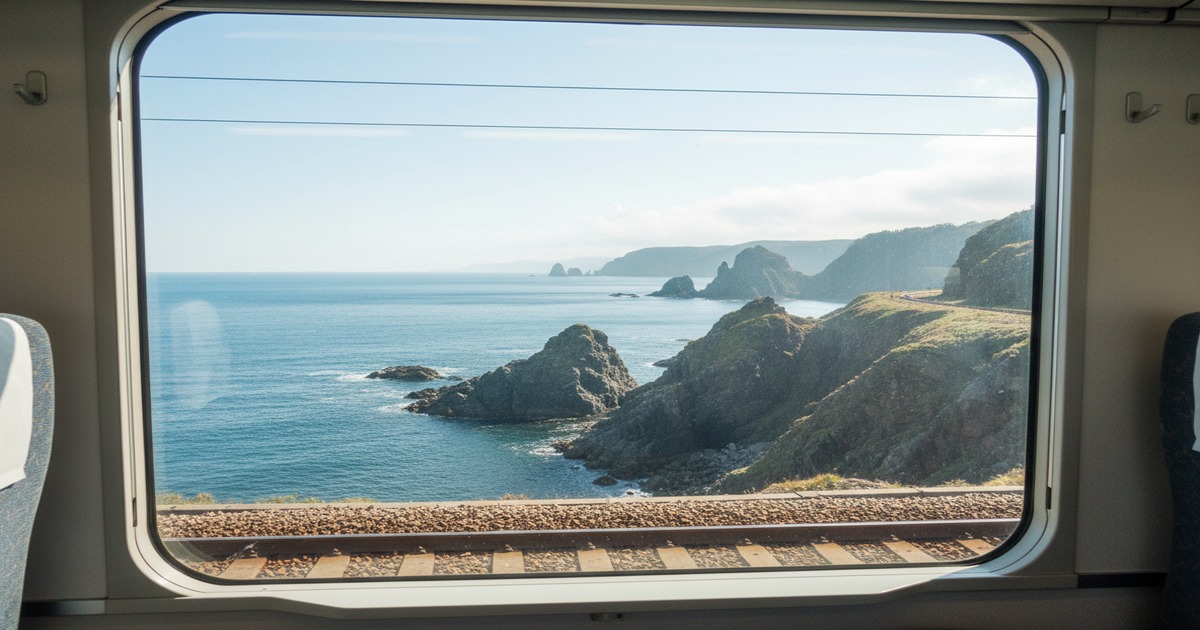 This image was generated by AI for illustrative purposes.
In this section, the train runs close to Ishikari Bay, creating the feeling of riding along the shoreline. On clear days, you may see the ridgeline of the Shakotan Peninsula.
When traveling toward Otaru, the sea appears on the right-hand side between Zenibako and Asari. Morning to midday light is often easier for viewing and photography.
The Zenibako to Asari section is also popular among railway photographers. You can photograph the sea from Zenibako Station's platform or step out toward the coastline if your itinerary allows.
How to Choose Between Local Train and Rapid Airport
If you are deciding between the two, choose by purpose.
| Item | Local train | JR Rapid Airport |
|---|---|---|
| Travel time | About 45 to 50 min | About 32 to 40 min |
| Adult fare | ¥800 | ¥800 |
| Reserved seat | None, all non-reserved | uSeat available for extra fee |
| Frequency | 2 to 3 trains per hour, early morning to late night | Around 2 trains per hour, with gaps early and late |
| Stopovers | Stops at Zenibako, Asari, Minami-Otaru | Does not stop at these stations |
| Best for | Stopovers, scenery, flexible travel | Airport connections, speed, larger luggage |
The fare is the same, so Rapid Airport is more efficient if your only goal is reaching Otaru. But if stopovers or the sea view are part of the trip, a local train has a clear reason to choose it.
For Rapid Airport details, see Sapporo to Otaru JR Rapid Airport Guide.
Frequently Asked Questions
How long does the local train take from Sapporo to Otaru?
It takes about 45 to 50 minutes. That is around 10 to 15 minutes longer than JR Rapid Airport, but local trains let you stop at stations such as Zenibako, Asari, and Minami-Otaru.
Where can I buy the Ichinichi Sanpo Kippu one-day ticket?
It is sold only on the day of use and is not available in advance. You can buy it at counters or reserved-seat ticket machines at major eligible stations in the free area. IC card purchase and use are not supported.
Can I use Suica or Kitaca on local trains?
Yes. The Otaru to Sapporo section of the Hakodate Line is inside the Kitaca area, so Kitaca and Suica can be used by tapping at the gates. SAPICA, the Sapporo city transport IC card, cannot be used on JR lines.
What kind of station is Zenibako?
Zenibako is a historic station opened in 1880 and is known for sea views over Ishikari Bay. Its 1931 gambrel-roof station building is also distinctive. Near the station, you can find cafes where you can enjoy coffee while looking toward the sea.
Should I choose a local train or JR Rapid Airport?
The adult fare is the same at ¥800. Choose JR Rapid Airport if you are connecting from New Chitose Airport or prioritizing time. Choose a local train if you want to stop at Zenibako, Asari, or Minami-Otaru, or if you want to enjoy the coastal scenery more slowly.
Summary
The local train from Sapporo to Otaru is a good choice when the journey itself matters. Zenibako's sea-view station, Asarigawa Onsen access from Asari, and Minami-Otaru's proximity to Sakaimachi Street all give you reasons to stop before reaching Otaru Station.
The Ichinichi Sanpo Kippu, available on Saturdays and holidays during the 2026 season, can be economical if you make multiple stopovers. It takes a little more effort than IC card travel because you need a paper ticket, but it supports a more flexible day of wandering.
After arriving in Otaru, walking the canal and Sakaimachi area is the classic route. If you want to move farther along the waterfront or explore the hilly streets at your own pace, a rental cycle can also be useful. For the wider access picture, see the Complete Otaru Access Guide.