
Otaru is easy to start on foot, but not every route is flat. The best transport choice depends on distance, weather, hills, luggage, and whether you want a compact canal walk or a wider half-day route.
Quick Comparison
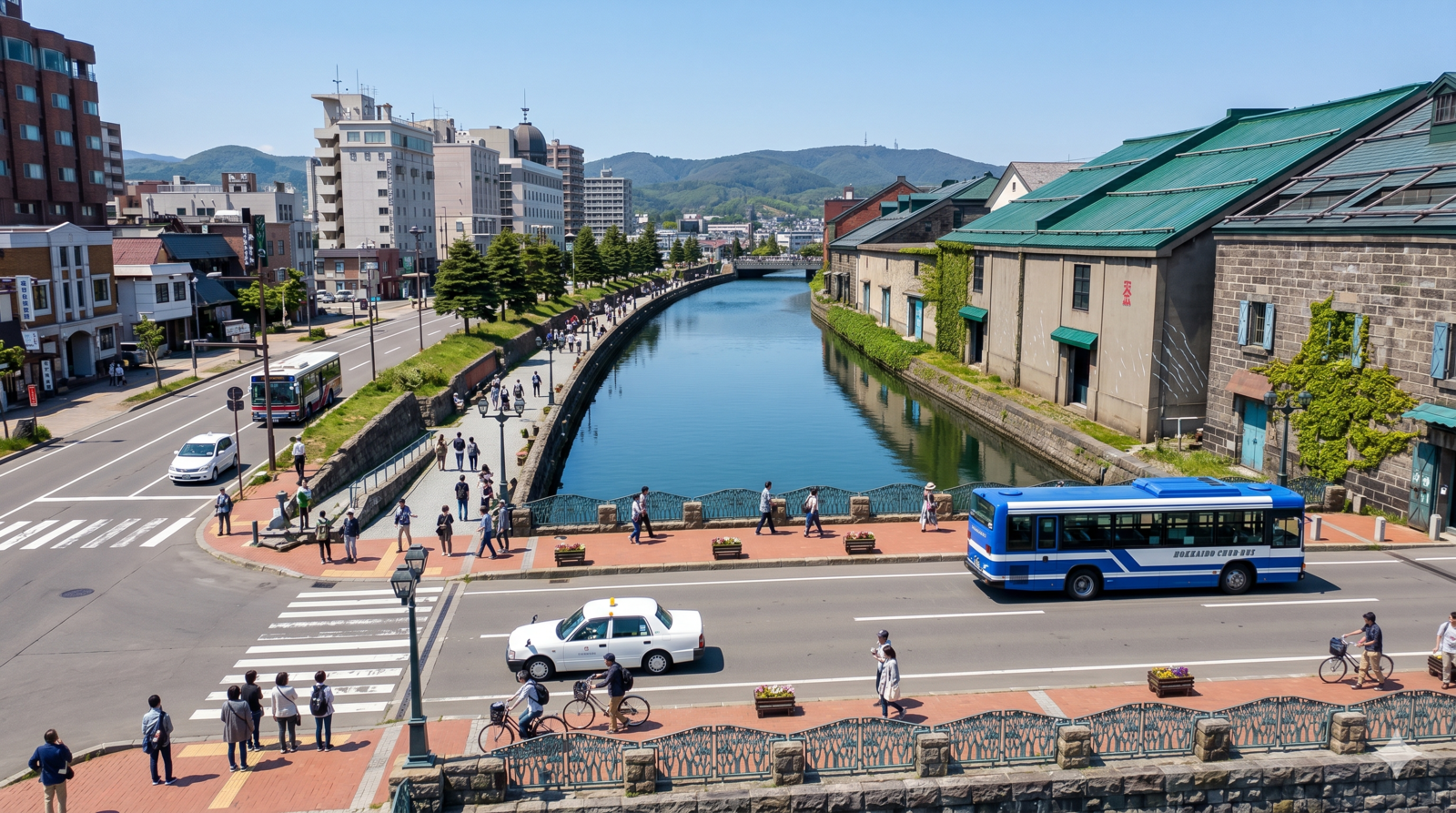 Image for travel planning.
| Option | Best for | Watch out for |
|---|---|---|
| Walking | Otaru Station, canal, Sakaimachi | Snow, ice, long uphill detours |
| Bus | Shukutsu, aquarium, some hill routes | Timetables and waiting time |
| Taxi | Groups, rain, luggage, short hill jumps | Higher cost during longer routes |
| Bicycle | Flexible half-day sightseeing | Weather, parking, traffic rules |
Walking Works for the Central Core
The station, canal, Sakaimachi Street, and many food stops are close enough for a simple walking route. This is the easiest plan for first-time visitors who want a classic Otaru day.
Walking becomes harder if you add viewpoints, Shukutsu, or several separated stops.
Buses and Taxis Are Best for Specific Gaps
Use buses when your destination is farther from the central core and the timetable fits your plan. Use taxis when the group is tired, the weather is poor, or you need a direct jump between hotel, station, and a viewpoint.
In winter, the extra cost of a taxi can be worth it if sidewalks are icy.
Bicycles Fit Flexible Half-Day Routes
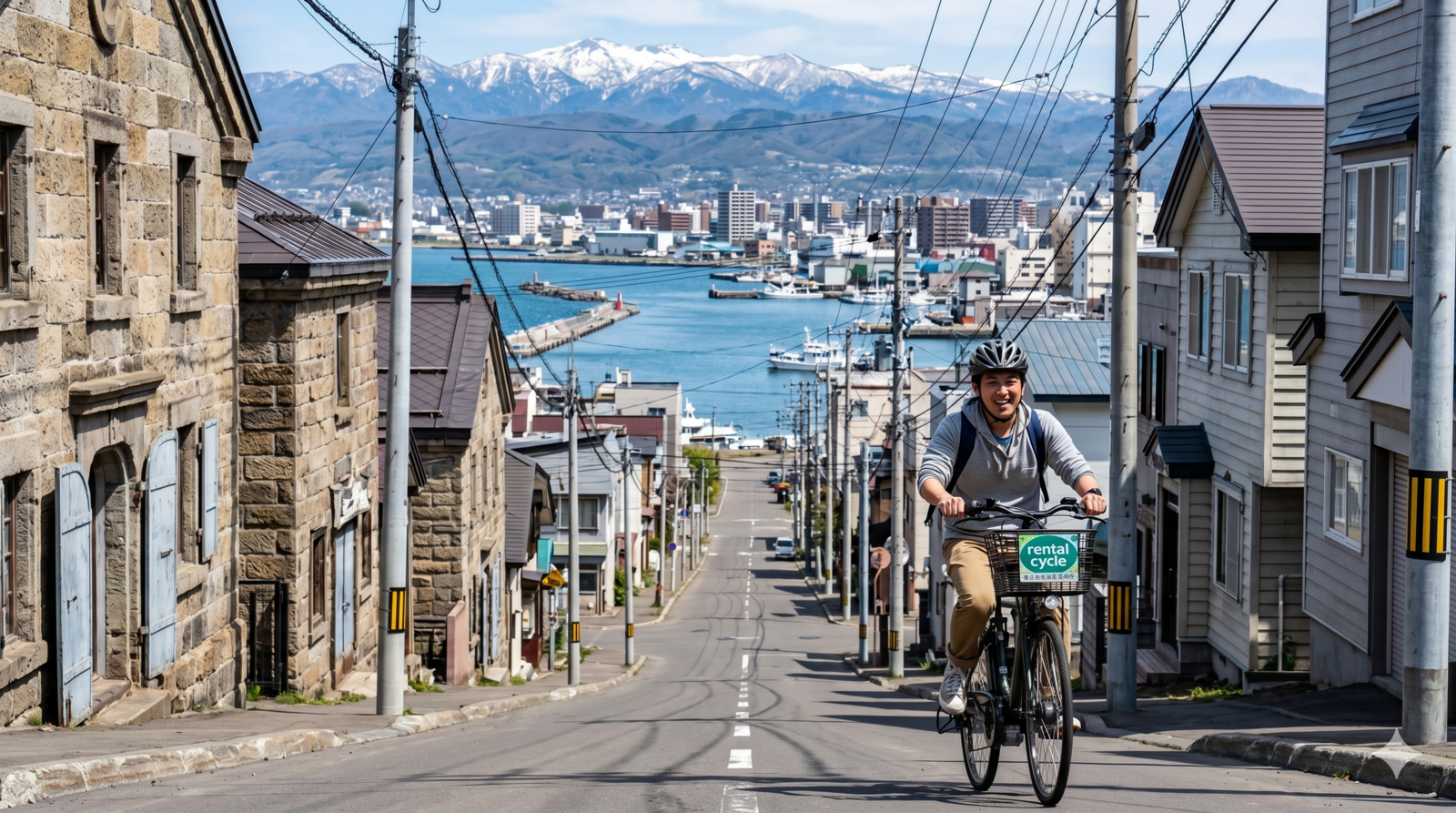 Image for travel planning.
An electric-assist bicycle is strongest when you want to move at your own pace. It can help connect the canal, old rail line areas, Temiya, Shukutsu, and food stops without waiting for transit.
It is less useful if your route is only one short canal-and-sweets walk.
FAQ
Use these quick checks before choosing transport.
Can I walk from Otaru Station to the canal?
Yes. Most visitors can walk it, but winter surfaces can be slippery.
What is easiest for hills?
Taxi, bus, or electric-assist bicycle. Choose based on weather, distance, and group size.
When should I rent a bicycle?
Rent one when your route has multiple separated stops or you want more flexibility than bus timetables allow.